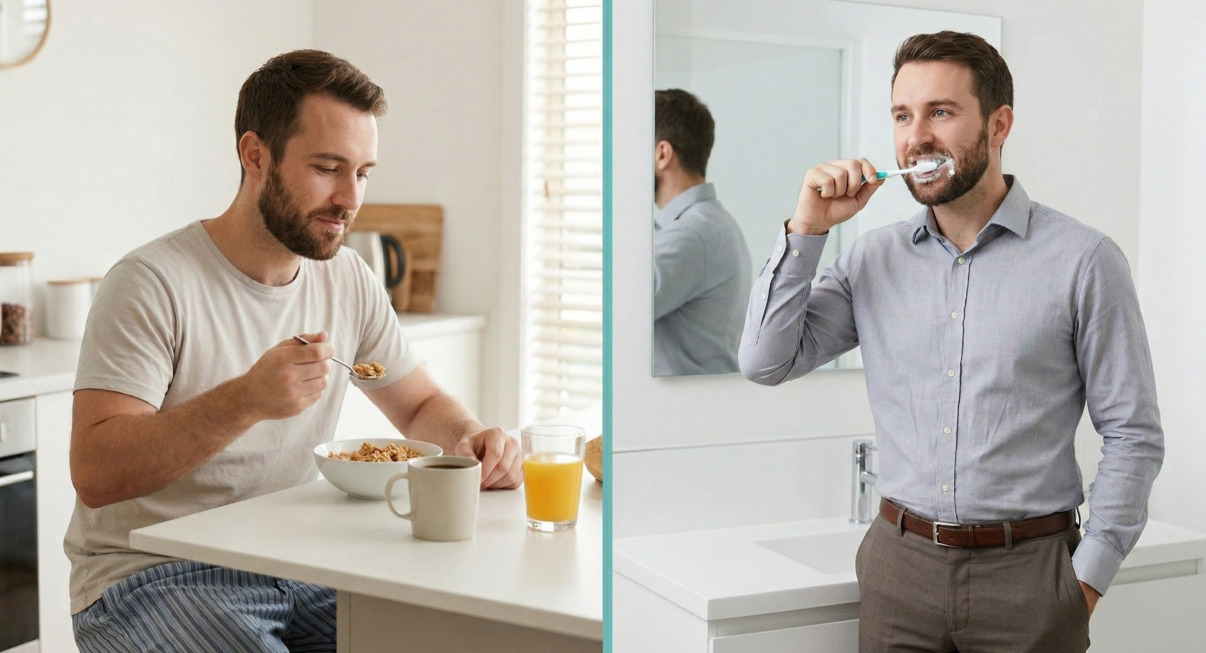
For many Australians, the morning routine is a well-oiled machine: wake up, have a coffee and a bowl of Weet-Bix, and immediately head to the bathroom to brush before rushing out the door. It feels like the pinnacle of hygiene – sending you off to work or school with minty-fresh breath.
However, dental experts are increasingly asked a surprising question: Is this proactive habit actually doing more harm than good?
The answer isn’t a simple “yes” or “no,” but rather a matter of timing. Here is the truth behind the post-meal brush and how you can protect your enamel.
To understand why brushing immediately after eating can be risky, we have to look at the chemistry in your mouth. When you consume food or drinks – especially those high in carbohydrates, sugars, or acids (like your morning orange juice or coffee), the pH level in your mouth drops.
This creates an acidic environment that temporarily softens your tooth enamel through a process called demineralisation. If you brush your teeth while the enamel is in this “softened” state, you are essentially scrubbing away this softened enamel. Over time, this leads to enamel erosion, tooth sensitivity, and a higher risk of cavities.
Because the “breakfast then brush” habit is so deeply ingrained in the Australian lifestyle, your dentist in Maroubra likely recommends a slight adjustment to your schedule rather than a total overhaul.
Saliva is your mouth’s natural defence system; it works to neutralise acids and remineralise the enamel. However, this process takes time. The general rule of thumb is to wait at least 30 to 60 minutes after eating before grabbing your toothbrush. This buffer allows your saliva to do its job, ensuring your enamel has re-hardened before you apply the mechanical friction of brushing.
We understand that waiting an hour after breakfast isn’t always feasible when you’re trying to catch a bus or beat the Sydney traffic. If you can’t wait, here are a few expert-approved alternatives:
a. Brush Before Breakfast: It sounds counterintuitive, but brushing as soon as you wake up removes the plaque bacteria that would otherwise feast on your breakfast sugars.
b. Rinse with Water: After eating, rinse your mouth vigorously with plain water to help wash away food particles and neutralise lingering acids.
c. Sugar-Free Gum: Chewing sugar-free gum stimulates saliva production, which speeds up the recovery of your mouth’s pH balance.
If you have already noticed signs of thinning enamel, such as yellowish tinting of the teeth, transparent edges on your incisors, or sharp pain when drinking cold liquids, it may be time for a check-up.
Consistent enamel wear can’t be reversed, but it can be managed. By visiting Gentle and Caring Dentistry in Maroubra, you can receive a professional assessment of your enamel health and personalised advice on your brushing technique. Modern dentistry offers various treatments, from fluoride applications to bonding, to help reinforce your smile against the effects of acid erosion.
The verdict?
Brushing after eating isn’t a myth, but doing it too soon is a factual risk. Give your teeth a half-hour head start, and they’ll stay strong for a lifetime.