wisemonkeys logo
FeedNotificationProfileManage Forms
FeedNotificationSearchSign in
wisemonkeys logo

Blogs

Scheduling in Operating Systems

profile
Juhi Soni
Sep 09, 2024
0 Likes
0 Discussions
109 Reads

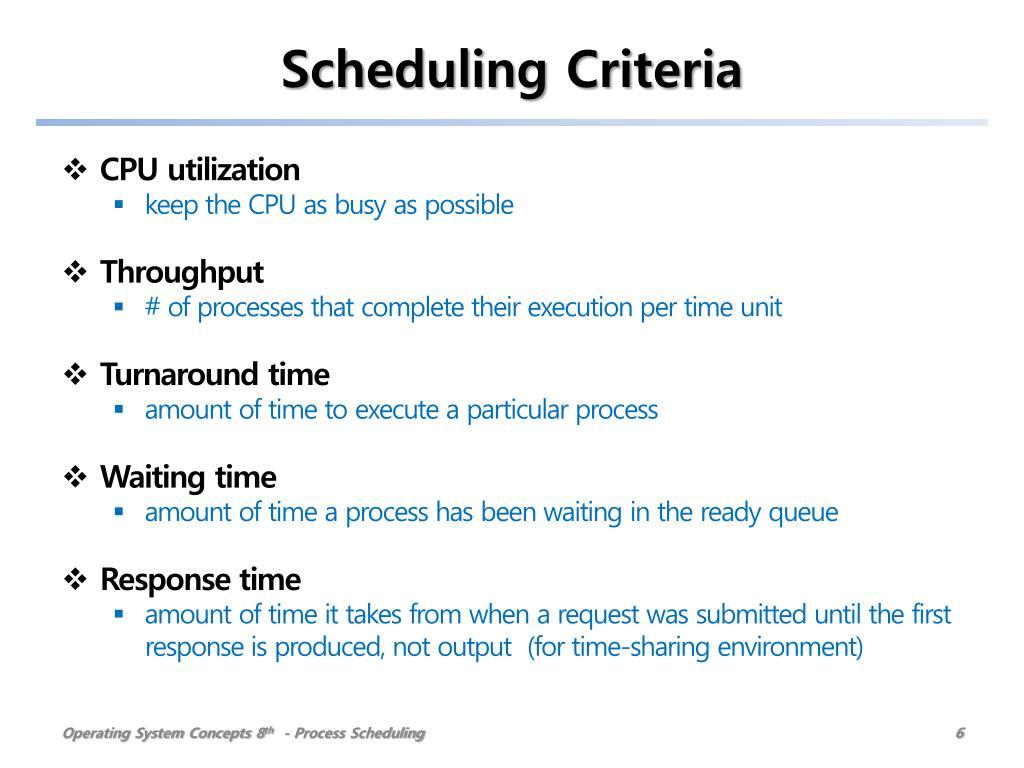
In an operating system, scheduling refers to the method by which tasks are managed and allocated CPU time. The CPU is like the brain of a computer, and scheduling helps ensure it is used efficiently by deciding which task runs at any given time. In this blog, we’ll explore three types of scheduling: Uniprocessor, Multiprocessor, and Real-time.


1. Uniprocessor Scheduling:

Uniprocessor scheduling refers to systems where only one processor (CPU) is available. This type of scheduling decides which task should be executed first from a pool of tasks. The two most common types of uniprocessor scheduling are preemptive and non-preemptive.


  • Preemptive scheduling allows the CPU to switch between tasks even if a task is not completed. For example, if you’re watching a video and suddenly open a document, the CPU will stop processing the video and switch to the document.


  • Non-preemptive scheduling lets the task finish its execution before switching to another. This is like waiting in line at the cafeteria—everyone gets served one by one.


A widely used preemptive scheduling algorithm is the Round Robin method, where each task gets a fixed amount of CPU time (known as a time slice) before switching to the next task.


2. Multiprocessor Scheduling:

In multiprocessor systems, multiple CPUs are available to process tasks simultaneously. This is like having several chefs in a kitchen preparing different meals at the same time. Scheduling in such systems is more complex as the load must be evenly distributed across all processors to avoid overloading one processor while others remain idle.

There are two main approaches:


  • Symmetric multiprocessing (SMP): Each processor works independently and shares the same scheduling queue.


  • Asymmetric multiprocessing (AMP): One processor handles the scheduling, while the others follow its instructions.


Multiprocessor scheduling is used in powerful servers and modern computers to handle heavy workloads like running multiple applications simultaneously.


3. Real-time Scheduling:

Real-time scheduling is critical in systems where tasks must be completed within a strict deadline. For example, in a self-driving car, the system must process sensor data and make decisions in real-time to ensure safety.

There are two types of real-time scheduling:


  • Hard real-time: Missing a deadline can lead to system failure, like in medical devices.


  • Soft real-time: Missing deadlines is not catastrophic but still undesirable, like in video streaming where slight delays may cause buffering.


In conclusion, scheduling is essential for efficient system performance, and different types of systems require different scheduling approaches. Whether it’s managing tasks in a single CPU, distributing loads across multiple CPUs, or meeting real-time deadlines, scheduling ensures that your computer runs smoothly.



Comments ()


Sign in

Read Next

What is Spyware?

Blog banner

Uber

Blog banner

A BLOG ON MYSQL

Blog banner

Virus

Blog banner

10 Signs your Computer has Virus

Blog banner

Record Blocking

Blog banner

Kids Grieve Too

Blog banner

Multiprocessor scheduling

Blog banner

The Importance of Financial Literacy for College Students

Blog banner

IT Service as as Value Creation

Blog banner

Social Network Analysis: Ek Naya Nazariya Data Science Mein

Blog banner

Social Engineering

Blog banner

8 Reasons Why You Must Try Digital Marketing

Blog banner

Process states

Blog banner

Service Strategy In ITSM

Blog banner

What is service level Agreement?

Blog banner

Lifestyle of a photographer

Blog banner

Process, process creation and process termination

Blog banner

What is Internet

Blog banner

Artificial Intelligence and I

Blog banner

What is Email? Uses of Emails

Blog banner

Memory management

Blog banner

Multicore and multithreading 171

Blog banner

Life lesson

Blog banner

Principal of concurrency

Blog banner

Why Festivals Are the Best Classrooms for Young Minds?

Blog banner

Os assignment

Blog banner

Web browser forensics:Tools,Evidence collection and analysis

Blog banner

DATA VAULT

Blog banner

"Games and the future"

Blog banner

Multicore CPUs

Blog banner

Deadlock

Blog banner

Festive Ethnic Wear Guide: Patola-Inspired Looks for Every Celebration

Blog banner

Old age lifestyle

Blog banner

Cache Memory in Operating Systems

Blog banner

Clustering Techniques

Blog banner

Session Vulnerabilities

Blog banner

operating system

Blog banner

AI & Data Science in Healthcare – Predicting diseases, medical imaging analysis

Blog banner

Life of an army person

Blog banner

Defining youtubr

Blog banner

My favourite food

Blog banner