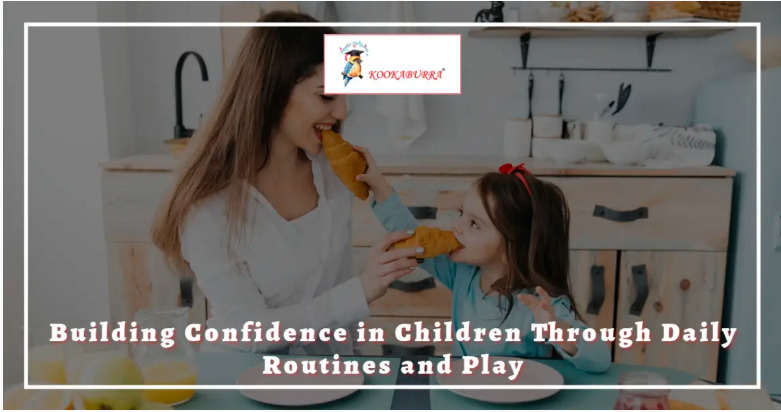
Confidence is an essential element, and it begins to build from a young age. A confident child is more likely to investigate a situation, express their ideas, take risks with courage, and establish a positive relationship. Confidence is not something that is instilled in a child from birth. It can be built in a child through a series of daily activities, including a mix of play. This not only provides a sense of comfort to the child but also makes them feel secure and confident. By combining these activities with play, the child develops confidence effortlessly and stress-free.
It is an essential attribute in the development of a child emotionally, socially, or cognitively. The positive effects of confidence in children include their readiness to play the initiatory role, venture into the world of new experiences, and share their ideas and feelings freely. They can face errors without fear and form good relationships with others. Confidence in children will enable them to be independent, making all their own decisions and believing in their capabilities. The earliest childhood years are the best to instil confidence in children as they learn about their world.
Established daily routines provide a sense of consistency and predictability for kids and make them feel secure and in control of their surroundings. When kids know what to anticipate throughout the day, they can look forward to tackling a task with confidence and a sense of competence.
Activities that are carried out regularly, for example, morning routines, eating times, and bedtimes, ensure that children are able to predict what is going on and therefore become confident enough to handle the tasks of the day with ease and without anxiety.
Activities like dressing themselves, cleaning up toys, and hand washing are daily routines that enable children to perform tasks on their own because, by doing these tasks, they feel proud of themselves, and they feel they are able.
Daily activities also inculcate a sense of responsibility in children in a gentle, natural manner. Children feel they count since they form part of activities, thus improving their self-esteem.
“Play is a critical aspect when it comes to developing confidence since children are allowed to learn and thrive in a relaxed and pressure-free environment.”
With play, children test new roles, concepts, and levels of challenge in a nurturing environment. Whether it is role-playing a teacher, stacking blocks, or going out into nature, it allows them to build confidence.
Playing naturally provides small difficulties that challenge children to think and act on their own. Every time a child solves a problem, regardless of how simple it may be, it encourages self-confidence in children.
Play acts as a natural mechanism for children to articulate their ideas and emotions. Creative tasks like art, role play, and storytelling enable children to verbalise their thoughts without any restrictions and build confidence in expression.
When child routines are integrated with playful learning, the child feels not only supported but also able to explore freely. Activities such as turning tidying time into a playful act, singing songs when dressing, or engaging in free play time after the completion of routine activities make mundane routines enjoyable. This balance is important, as it enables a child to feel more directed and, at the same time, makes them independent, a prerequisite for confidence-building activities.
The role of parents and caregivers cannot be overstated when it comes to helping children develop a sense of confidence. Praising children for effort and not results helps children persevere. Giving children small choices, being patient, and allowing children to do things by themselves help build their confidence. Not pointing out errors during play and appreciating small accomplishments helps build self-confidence in children.
Children who develop confidence from an early age can more easily adjust to new surroundings and overcome obstacles while having an optimistic attitude towards life. They can develop competent communication skills, become autonomous learners, and possess proper self-esteem. Such confidence can bring comprehensive success to children in both learning environments and day-to-day life.
Currently, most contemporary strategies in early learning place particular value on the need to encourage confidence-building through day-to-day experiences. Just a few examples in this regard include preschool learning strategies, where initiatives such as the Kookaburra Preschool are predicated on the design of child-centric environments in which daily schedules and play are intricately woven together to facilitate the child’s emotional, social, and intellectual development.