In today’s busy world, the routines of children often include structured classes and activities. In addition to the usefulness of structured knowledge, unstructured activities remain important for a child’s development. In unstructured play, children can utilise their ideas with no limitations or direction from an adult. Children use imagination and discover how to think creatively and on their own. Children discover how to solve problems and show emotions freely. In unstructured play, self-confidence and curiosity are instilled. Unstructured times spent at a young age provide a fantastic basis for developing knowledge for the rest of a child’s life.
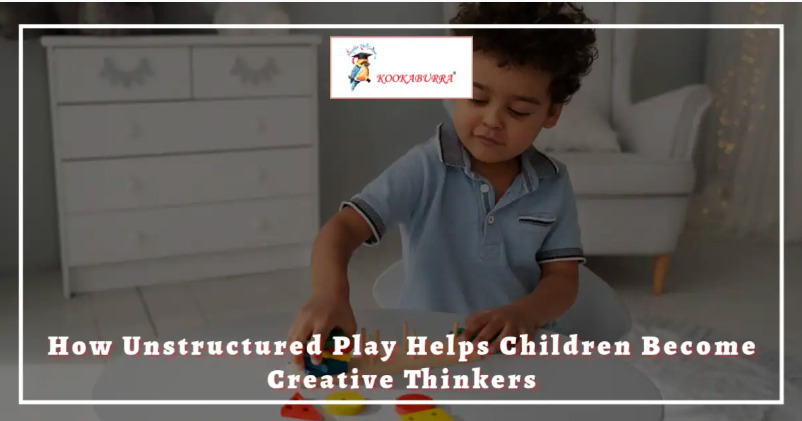
Unstructured play refers to a play activity that is entirely controlled by children and has no predetermined rules, objectives, or adult guidance. In this kind of play activity, children decide what they want to play, how they want to play, who they want to play with, or when they want to discontinue playing. Some of these types of play include pretending that a cardboard box is a spaceship, playing with building blocks without any kind of instruction, making up stories using toys, playing outside using elements such as sand, sticks, or leaves, or making use of artistic expression such as drawing, dancing, or role-playing. In contrast to structured play, this kind of play activity provides children with an opportunity to exercise their imagination skills, which is vital for helping children develop creativity and independence of thought.
Creativity extends beyond artistic expression, becoming a vital life skill that contributes to a well-rounded childhood experience. Artistic individuals are those who also excel in problem-solving, adjustment, emotional expression, critical thinking, and developing a sense of confidence. In matters of childhood development, creativity builds a foundation in a critical thinking process, innovation, and even emotional intelligence that otherwise may only be developed in adulthood. Because creativity requires no structure, playtime is the optimal time when this ability can truly be nurtured, where kids can share, explore, and discover on their own.
1. Fosters Imagination and Original Thinking
When children are left with no instruction, they build their own world and their own story. They turn anything they want into anything they like. The child, with the aid of the manufactured object, comes up with his or her own unique thought. Their creativity develops as their imagination is nurtured. Imagination is the core of creativity.
2. Develops Problem-Solving
In free play, children may encounter small problems like how to build a structure, share play objects or carry on a game when it fails. They overcome these problems instead of waiting for adult solutions. This practice improves their problem-solving skills. Furthermore, children learn that there may be more than one answer to a problem.
3. Encourages Independent Thinking
In unstructured play experiences, children can make their own choices regarding play rules and play roles and directions. Making their own choices also helps build confidence and self-reliant thinking in children because they believe in their choices and ideas.
Parents and caretakers could help children in unstructured play by incorporating small but significant changes in daily living. Reducing the time on the screen gives the child more time to observe the world around them and use their imagination. Encouraging outdoor play gives the children the chance to move, discover, and invent. Selecting unpretentious and open-ended materials over high-tech materials helps inspire imagination and independence. Having the children exposed to boredom is also very important, because more often than not, they come up with very imaginative ideas. Perhaps the most important thing is to give the children the chance to explore on their own and not supervise them every step of the way. Even 30 to 60 minutes a day will help tremendously shape a child.
Children who participate in unstructured play activities possess skills that go beyond their childhood years. They generally become very innovative and have faith in their ability to make any kind of decision. Children also become better problem solvers and emotionally stable individuals due to the benefits of unstructured play activities. Eventually, they grow up to be very eager learners in their lives. Skills acquired through unstructured play activities help children achieve their educational goals and prepare them for real-life challenges.
Play-based education, particularly unstructured play, is known for being very important for early childhood education. Many progressive preschool settings, like Kookaburra Preschool, involve hands-on experiences with an emphasis on independence and creativity. Practical activities in the regular curriculum are an essential element in the support of this type of learning, as described in their online article about the advantages of practical life activities in preschool. These two functions, unstructured play and practical life skills, can improve problem-solving skills, confidence, and lifelong learning skills of children.