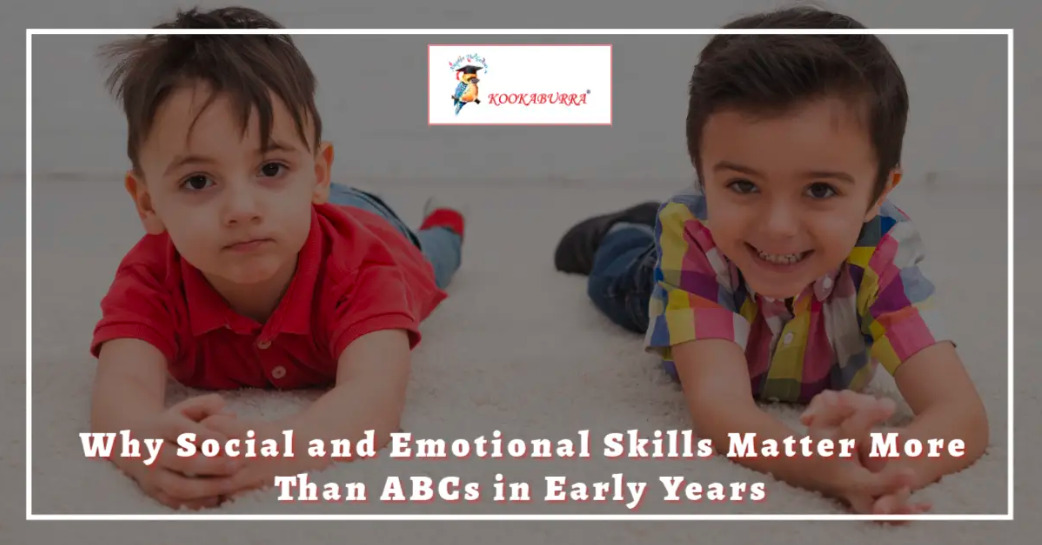
In the earlier years of a child’s development, it is common for the alphabet, numbers, and academic aims to constitute the main learning; but these alone do not ensure a child achieves success. Social and emotional skills like recognising and comprehending emotions, building relationships, and controlling behaviour play a remarkably more conclusive role in developing people who feel confident, resilient, and capable. If these skills are acquired from a young age, children are able to learn more efficiently, adjust to the requirements of a situation, and flourish in the process.
Social and emotional skills refer to the skills that aid children in comprehending their emotions and engaging with other people positively. The skills comprise the ability to recognise and express emotions positively, communicate ideas and needs appropriately, and develop positive and respectful relationships. Children who possess strong skills in interacting with others can exhibit empathy, kindness, and the ability to respond to stress and frustrations calmly, in addition to learning to make responsible and effective decisions in case of conflict. All skills contribute to children having proper emotional intelligence and aiding them in their daily experiences.
If your child is learning letters and numbers is vital, but it is in no way a guarantee that a child will be successful. They might be able to count to a hundred and recite the entire alphabet backwards, yet still be struggling in school if they have difficulty controlling their emotions, listening to directions, and interacting well with other children. Having good social and emotional skills allows children to be secure and happy in a learning environment, to stay on task and focused on what is being taught, to take risks without fear of failure, and to work well together with other children and teachers.
Children who can recognise their emotions will be able to handle their feelings of frustration, nervousness, and even enjoyment. These children will remain calm, in focus, and centred in their minds, which is perfect for learning.
Building good social skills benefits children in developing pleasing and healthy interactions with peers and elders. Positive interactions provide an encouraging learning atmosphere to children in which they feel valued and motivated to learn.
When children can make decisions, solve conflicts, and communicate their ideas well, they develop confidence and a feeling of independence. This not only helps them in the learning process but also brings success in their future lives.
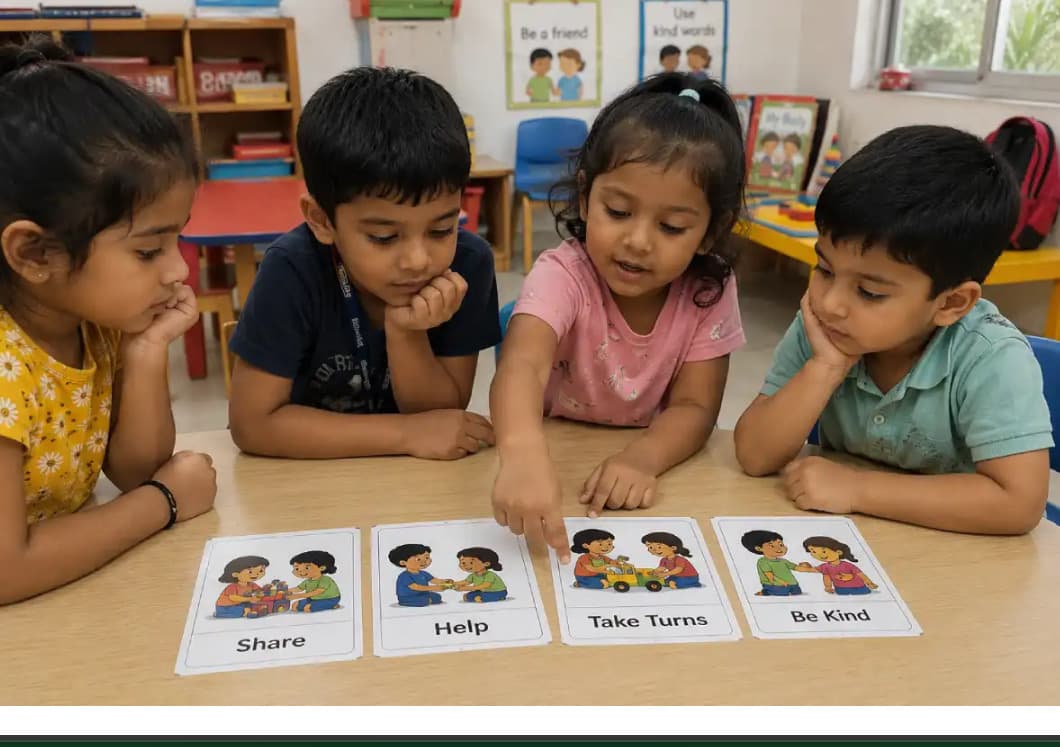
Play is one of the most effective mechanisms that can be employed to develop the social and emotional capabilities of children. Children are able to learn sharing and turns through play, cooperate and be part of a team to accomplish different tasks. Children also learn the ability to role-play real life through play. Moreover, children develop the ability to understand the perspective of others through play.
Routines in everyday life also have an important function in promoting emotional stability as well as understanding of social relationships. For example, basic routine activities involving interactions like saying hello to each other, picking up after each other, adhering to a timetable, or group projects can impart responsibility and patience to children.
Kids who are able to develop social and emotional skills during their early stages of development have a greater chance of achieving academic success, developing wholesome interpersonal relationships, learning effective ways of coping with stress, developing efficient methods of communication, and cultivating healthy self-esteem. How Parents and Teachers Can Support Social and Emotional Competencies. In fact, adults have a huge role to play in the development of these skills. It would involve encouraging communication, practising appropriate behaviour, validating the feelings of the child, providing a supportive setting, and leaving the child to deal with a problem on his/her own. Such measures help the child feel understood, sound, and ready to face the world.
There are a number of progressive early learning institutions that stress the balance between guided teaching and child-led learning in socialisation and the development of emotional skills. For instance, Kookaburra Preschool is the best Preschool centre in Mumbai. Here, such environments are created where children get involved in play, practical life activities, and various routines that help them build aspects of independence, empathy, and confidence. Real-life experiences are also carried out in these environments that help children explore their emotions, build relationships, and enhance their problem-solving skills.