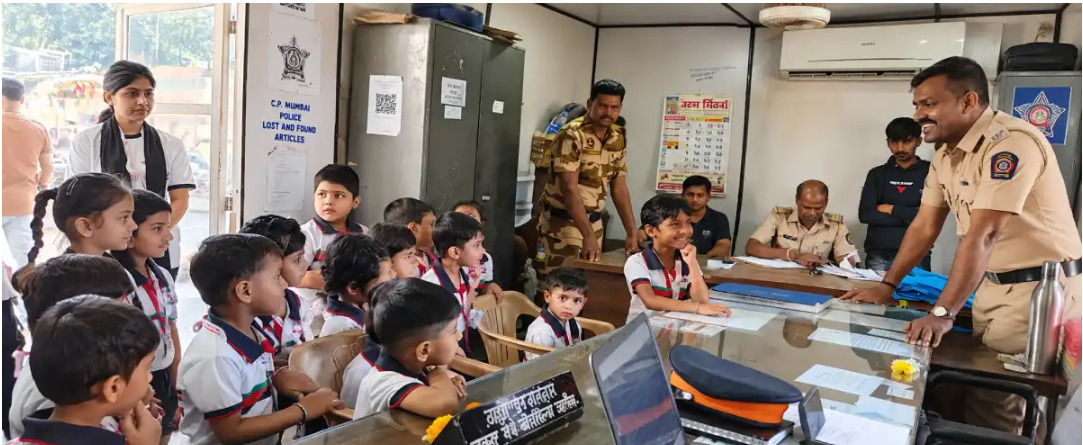
Children are naturally inquisitive about the world that surrounds them. Whether it is a visit to the grocery store, cooking food, watering plants, sorting out toys or observing traffic flow, all of these activities can become an avenue for asking questions and making discoveries. Learning for young children is not confined to situations wherein they are seated and reading books or working on worksheets; much of their learning begins through real-life experiences.
Real-life experiences allow children to relate what they see and hear to something that they can actually do. It becomes more meaningful for them to be engaged in an experience than just being exposed to vocabulary words, numbers, shapes and concepts.
1. Children Understand Concepts Better Through Experience
Some concepts are quite difficult for little children to comprehend when expressed through language only.
For instance, saying that one particular object is “heavier” than another will have no meaning in the beginning itself. However, when children compare the two objects themselves, they can feel the difference in physical form.
This way, they can learn counting through the process of counting different kinds of fruits, shapes through various objects in the house, and measurement while helping with cooking.
2. Real-Life Learning Supports Problem-Solving
A toy does not fit into a box. Several objects might have to be placed in a confined space. The plant needs to be watered. The child might need to figure out how he or she will carry several toys at once. Such experiences allow the children to explore what is possible for them to do.
Rather than solve the problem for the children, the adults could give the children some time to solve the problem. The children might experiment, fail, adjust their method and finally find a solution to the problem.
3. It Builds Independence in Young Children
Easy duties like tidying up toys, deciding which outfit to wear from two options, bringing their own water bottle, stacking books on a bookshelf, or even helping with the preparation of their belongings can motivate children to be more independent.
It may take some more time at first than when it is done by an adult. But mistakes could also be made. However, allowing them to do their age-appropriate duties would provide experience to them.
With time, children gain confidence in doing little things, making little decisions and taking care of their own belongings.
4. Everyday Experiences Introduce Early Maths
They can count the number of spoons when they are laying the table, compare the sizes of fruit, sort clothes according to colours, distribute snacks among groups, and count the number of steps required to reach a certain destination.
Such activities allow kids to develop an understanding of:
Since all the above concepts are used for some purpose, early math becomes more meaningful for them instead of remaining confined only to worksheets.
5. Real-Life Experiences Encourage Better Decision-Making
They get to choose whether they will read this or that particular book, which toys to put back first, what colour they will use for their task or what kind of fruits they will add to their snacks.
When kids are offered certain choices according to their age, they have a chance to practice making decisions.
For instance, parents shouldn’t ask, “What would you like to wear today?” but rather give the kid two options to choose from.
When a child gets many chances to choose something, he learns that his decisions make certain results happen.
6. Children Learn Social Skills Through Real Situations
Going to the park, engaging in activities in groups, helping at home, and interacting with other children can give these young learners the chance to practice patience, cooperation, sharing, listening, and requesting.
For instance, if two children want the same toy, there is a chance for the two to learn how to express their feelings and share the toy.
In this case, adults should not rush to solve all conflicts but rather be guides in these scenarios.
7. Real Experiences Make Learning More Memorable
Learning experiences that engage children in activities lead to better retention of those experiences.
Consider how telling a child that he or she is going to plant a seed differs from letting a child dig soil in the pot, put the seed inside, water it, and see how it grows over several days.
The latter experience offers a concrete activity for the child to see and take part in. He or she can see how things change and relate them to what was done before.
8. Children Learn Through Trial and Error
A child can spill water while watering the plants, put things in the wrong place, add too much substance to the pot, or find it difficult to do a simple thing.
The children can reflect upon what went wrong, what they could have done differently, and try once more. It makes them feel comfortable about making mistakes and helps them continue experimenting.
It will help them not concentrate solely on doing the right thing but consider the process as well.
Parents don’t have to arrange elaborate activities each day. Simple modifications to the way adults interact with kids can transform common occurrences into something more special.
During meal preparations, let children join you in doing simple things like washing veggies or counting out ingredients. When out on a shopping trip, ask them questions like identifying colours or counting. When cleaning up, let them organise things. When walking around, discuss everything they notice with them.
However, it is important to understand that parents don’t always have to turn every event into some kind of learning opportunity for kids. Children also need some time for recreation and relaxation.
Practical experience allows one to enhance children’s learning experience by giving them chances to learn through observation, participation, asking questions, and understanding concepts through real-life experience. With encouragement from parents and teachers to learn outside books and worksheets, even very simple activities may assist children in developing curiosity, independence, communication skills, problem-solving and self-confidence. One can also try exploring the concept of Nature Based Learning to find out how nature-based experience can contribute to making early learning interesting for children, whereas Elzee Preschool & Daycare offers a child-centred environment for meaningful learning through exploration and participation.