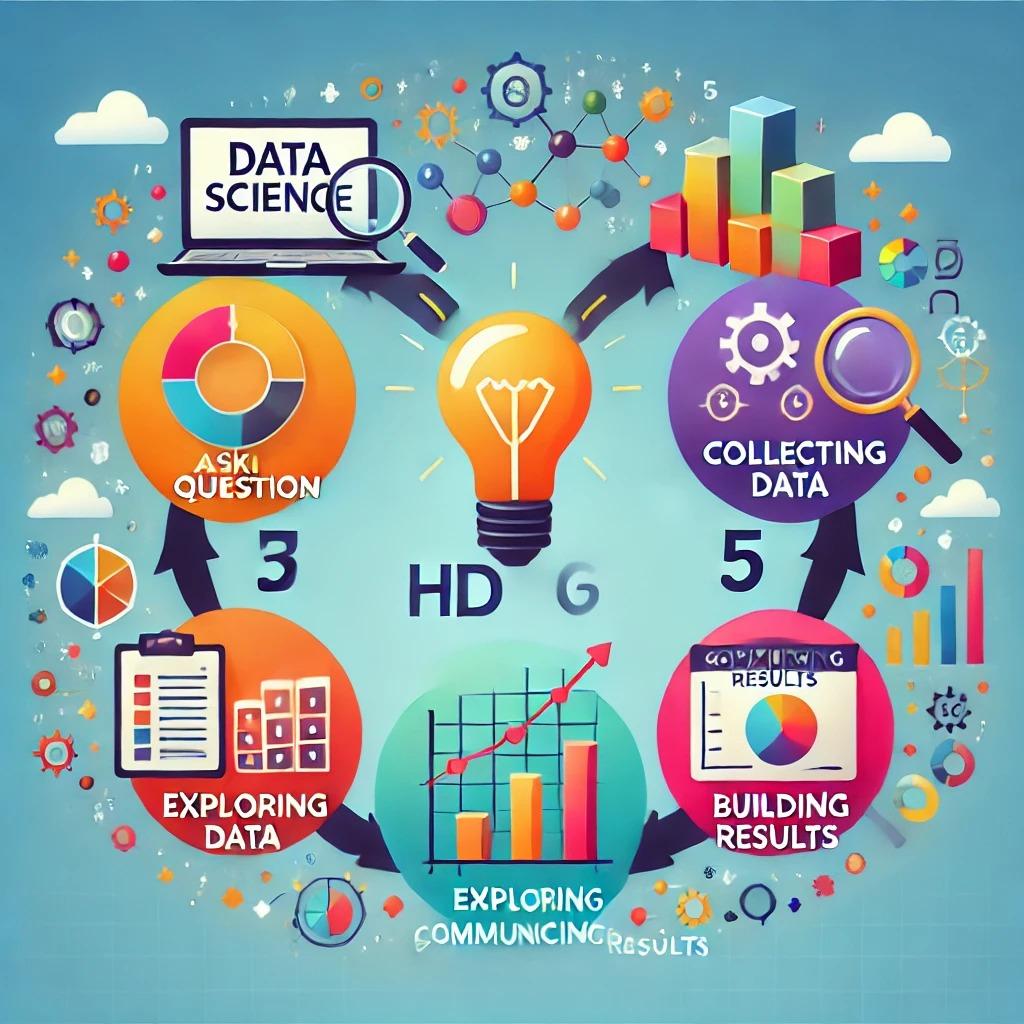
Data science ek aisi field hai jo aaj har industry ko transform kar rahi hai. Lekin data scientists raw data ko kaise meaningful insights mein badalte hain? ye blog mein main aapko data science ke 5 important steps ke baare mein bataunga. Chaahe aap customer behavior analyze kar rahe ho ya future trends predict kar rahe ho, yeh steps aapko data se decision-making tak le jaate hain.
1. Ask an Interesting Question
Data science ki shuruwat curiosity se hoti hai. Sabse pehle aapko ek clear question identify karna hota hai jiska jawab aapko data ke through chahiye. Bina sahi question ke chahe analysis kitna bhi complex ho, uska koi useful result nahi milega.
Example: Agar aap ek retail business mein ho, toh question ho sakta hai, “Kaunse customers agle 3 mahine mein chhodne waale hain?”
2. Obtain the Data
Question ke baad, agli step hoti hai relevant data collect karna. Yeh step data ko database se extract karna, APIs ka use karna, ya websites scrape karne tak ho sakta hai. Data CSV files, Excel sheets, ya specialized formats mein ho sakta hai. Sahi data lena important hai, kyunki jo insight aapko chahiye uska base hi data hai.
Tip: Public datasets jaise government websites pe milte hain, beginners ke liye achhe starting points hain.
3. Explore the Data
Data explore karna matlab us data ko samajhna. uska structure kya hai, missing values hain kya, aur patterns dhoondhna. Is step mein data visualization ka use karke aap samajh sakte hain ki different features kaise interact karte hain.
Key Techniques:
Example: Agar aapke paas customer purchases ka data hai, toh aap pata laga sakte hain ki koi seasonal trend hai kya.
4. Model the Data
Yeh step statistical ya machine learning models banane ka hai jo aapko prediction karne ya data ko classify karne mein help karte hain. Aap regression, classification, ya clustering algorithms ka use kar sakte hain. Ismein decision trees, random forests, ya neural networks jaise algorithms ka role hota hai.
Tip: Agar pehla model perfect nahi hai toh not a big deal. Data scientists normally kai models try karte hain aur unko tune karte hain taaki accuracy badh sake.
5. Communicate and Visualize the Results
Last aur sabse important step hai apne findings ko aise present karna ki stakeholders samajh paayein. Data visualizations jaise bar charts, scatter plots, ya dashboards complex data ko asaan bana dete hain. Effective communication se log aapke analysis ke basis pe action le sakte hain.
Example: Aap ek dashboard bana sakte hain jo customer churn risk predict kare, taaki business team apne retention efforts pe focus kare.
Raw data se valuable insights tak ka safar itna mushkil nahi hai. Agar aap in 5 steps ko follow karte hain. sahi question puchho, data gather karo, explore karo, model karo, aur effectively communicate karo. to aap data science ka power unlock kar sakte hain aur information ko action mein badal sakte hain.