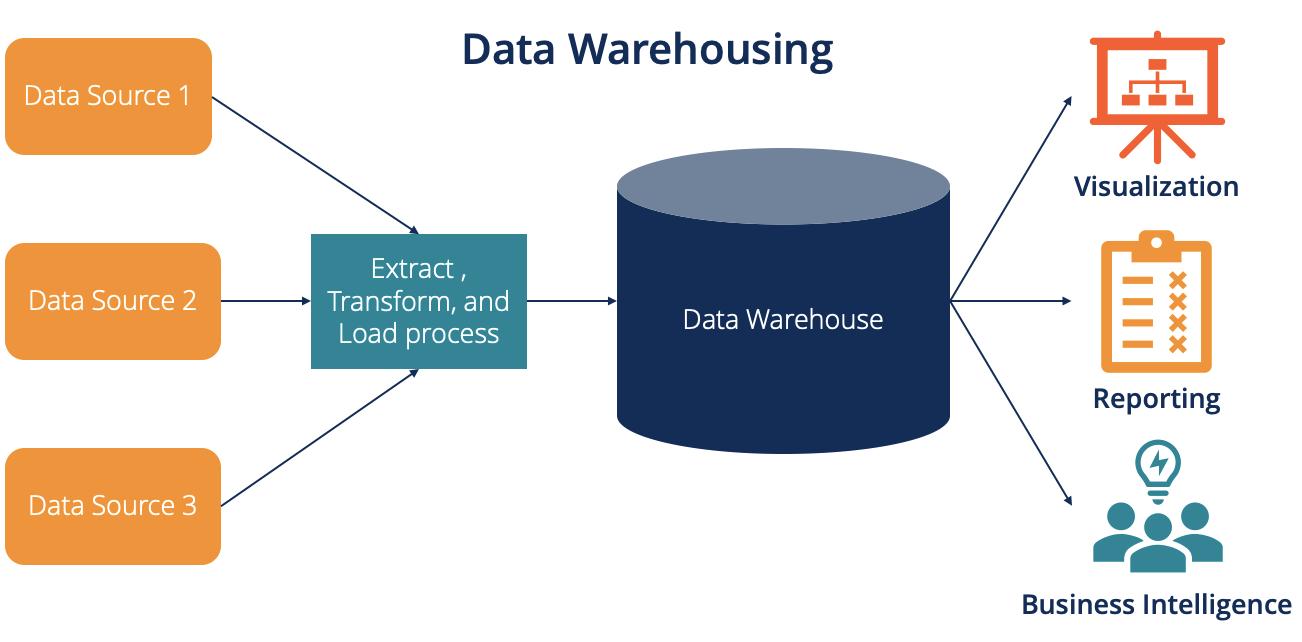
Data Warehousing ek advanced technique hai jo alag-alag data sources se data ko collect, manage aur analyze karne ke liye use hoti hai. Yeh technology businesses ko apne vast data ko ek centralized aur organized form mein rakhne mein help karti hai, jisse unhein important insights mil sakein aur woh apne business decisions ko data-driven bana sakein. Data warehousing ka primary purpose transactional operations ke bajaye analytical processing par focus karna hai, taaki historical data ko store karke trend analysis aur reporting mein madad mil sake.
Data Warehousing ke Mukhya Components aur Characteristics
- Subject-Oriented: Data warehouses subject-oriented hote hain. Matlab, data warehouse specific business domains ya subjects par focus karta hai, jaise sales, marketing, finance, inventory, etc. Iska matlab yeh hai ki data warehouse transaction-based data ke bajaye subject-specific analysis par zyada emphasize karta hai.
- Integrated Data: Data warehousing mein multiple sources (jaise relational databases, CRM, ERP, flat files, etc.) se data ko collect karke ek uniform format mein integrate kiya jata hai. Yeh integration data ko reliable aur consistent banata hai, jo analysis aur reporting ke liye zaroori hai.
- ETL Process (Extract, Transform, Load): Data warehouse mein data ko directly store nahi kiya jata; pehle ETL process kiya jata hai:
- Extract: Alag-alag sources se data ko nikaalna.
- Transform: Data ko standardized format mein convert karna taki woh warehouse mein compatible ho.
- Load: Data ko warehouse mein store karna.
- Non-volatile: Data warehouse mein once data load ho jaata hai, toh uska frequently update hona zaroori nahi hota. Yeh data mostly read-only hota hai, jisse yeh reliable aur stable rehta hai aur is par bar-bar analytical queries run kar sakte hain.
- Time-Variant Data: Yeh ek key feature hai jo data warehousing ko transaction-based systems se alag banata hai. Data warehouse mein data ko timestamp ke sath store kiya jata hai, taki long-term analysis aur trends ko samajhna aasaan ho.
- Schema Consistency: Data warehouse data ko ek predefined schema mein store karta hai, jo standardization aur uniformity ensure karta hai. Iska matlab hai ki har source se aane wala data ek hi format mein store hota hai, jo complex queries aur reports ko aasaan banata hai.
Data Warehousing ke Benefits
Data warehousing businesses ko insights nikaalne, reports banane aur analytics perform karne mein madad karta hai. Iske kuch main benefits hain:
- Efficient Data Retrieval: Data warehouse systems specially optimized hote hain fast retrieval ke liye, jo ki reporting aur analysis ke liye helpful hota hai. Iska matlab hai ki organizations apne data ko quickly access aur analyze kar sakte hain.
- High-Quality Data aur Consistency: Data warehouse mein data ko standardized aur integrated format mein rakha jata hai, jo data ki quality aur consistency improve karta hai. Yeh duplicate data ko minimize karta hai aur analysis ke liye reliable data provide karta hai.
- Historical Data Storage: Data warehousing systems long-term aur historical data ko store kar sakte hain, jo ki business trends aur patterns ko identify karne mein madad karta hai. Yeh ek achha tarika hai past performance ko evaluate karne aur future trends ko predict karne ka.
- Enhanced Business Decision-Making: Data warehouse real-time analysis ko support karta hai aur business ko accurate aur data-driven decisions lene mein madad karta hai. Yeh management aur business leaders ke liye useful information provide karta hai jo decision-making process ko simplify karta hai.
- Security aur Reliability: Data warehousing mein data securely store aur manage hota hai. Yeh unauthorized access ko restrict karta hai aur data integrity ko maintain karta hai, jo especially sensitive information ke case mein important hota hai.
Data Warehousing ke Use Cases
Data warehousing ka use aaj har major industry mein ho raha hai, aur kuch specific use cases hain:
- Retail and E-commerce: Sales aur customer behavior ko analyze karna aur personalized recommendations provide karna.
- Finance and Banking: Fraud detection, risk assessment aur customer segmentation ke liye historical aur current data ko analyze karna.
- Healthcare: Patient data aur treatment history ko analyze karke better healthcare decisions lena aur predictive analytics karna.
- Telecommunications: Network performance aur customer data ka analysis karke personalized services aur offers dena.
- Manufacturing and Supply Chain: Inventory levels, demand forecasting aur supply chain optimization mein data warehousing ka use hota hai.
Popular data warehousing platforms hain jaise Amazon Redshift, Google BigQuery, Snowflake, aur Microsoft Azure Synapse Analytics. In platforms ka use karke businesses apne data ko organize aur analyze kar sakte hain taaki woh insights nikaal sakein aur apne business objectives ko achieve kar sakein.
In summary, data warehousing ek powerful tool hai jo businesses ko insights aur trends generate karne, customer behavior samajhne, aur competitive advantage pane mein madad karta hai. Data warehouse alag-alag sources se data ko collect karke usko ek consistent format mein store karta hai aur advanced analytics aur data-driven decision-making ke liye accessible banata hai.