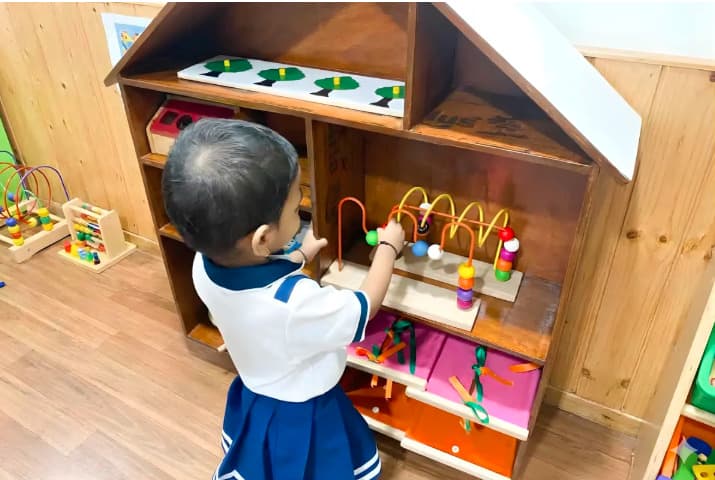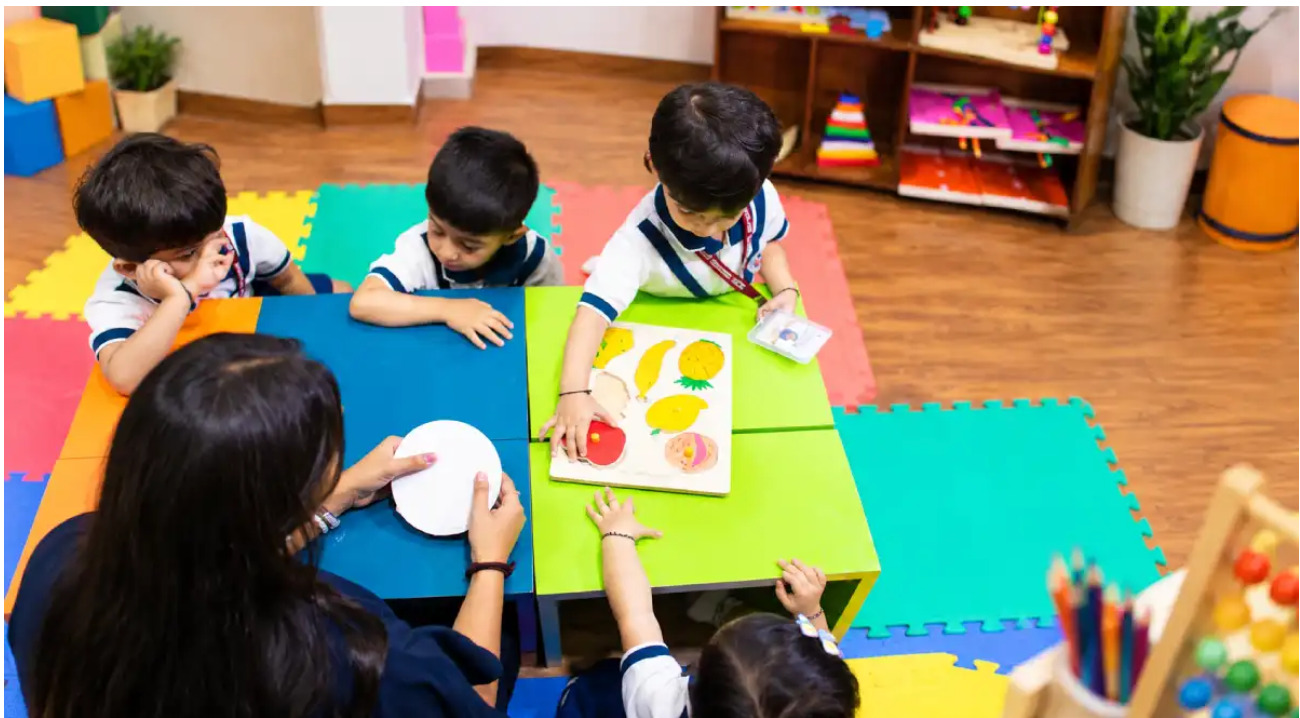
What appears to be just a game to an adult is actually a challenge to the child because every piece becomes a problem for the preschooler to solve. Preschoolers study shapes, colours, objects, and spaces, try different pieces and learn through the experience. As such, playing with puzzles turns out to be an enjoyable means to develop logical thinking in early years.
Puzzle solving can be incorporated into hands-on learning in preschool and childcare settings without being a structured lesson on logical thinking. Puzzles in early childhood education have been found helpful in developing problem-solving skills, spatial awareness, memory, perseverance and fine motor skills.
Logical thinking consists of observing information, making connections, comparing options, and predicting what can happen next. Young children acquire such skills in the course of their daily experience and play.
For instance, if a child examines a piece of a puzzle and thinks, “Where can I put this?”, then he or she starts making comparisons in terms of shape, colour, and position. After trying one option and realising that it will not work, a child moves on to another option.
One of the most significant strengths of puzzles is that they provide a problem for kids with a clear outcome: to complete the picture or put together all the pieces. They get to make errors, learn from them, and then try again without the pressure of an evaluation.
Through this process, they develop the skills of how to:
Spatial awareness refers to being able to comprehend where things are in relation to each other. Puzzles offer children hands-on experiences to build up their spatial awareness skills.
When kids turn, flip, and rotate puzzle pieces, they start comprehending ideas like:
It has also been shown that there exists a relationship between children’s puzzle play and their spatial transformation skills.
Pattern recognition is very crucial in logical reasoning, and puzzles motivate kids to search for visual cues. These include colour matching, linking lines, resemblance of shapes, and parts of a known image.
For example, when solving an animal puzzle, a kid will look for pieces with a certain colour or an animal body part. This makes them realise the importance of small parts in forming a big image.
Children are also prompted to remember the facts while doing a puzzle. For example, they may recall how one particular piece fits in, what pieces have already been tried before, or the part of the image they are working on. At the same time, puzzle play encourages children to focus on a certain task.
According to early-childhood guidelines, the process of doing a puzzle is good for memory, planning, and problem-solving. Therefore, for preschoolers, doing a puzzle becomes an easy way of practising concentration without making the learning process worksheet-oriented.
Not all puzzles are cracked in one attempt. There may be times when children have difficulties finding the right piece or getting frustrated when a particular piece does not fit.
With some encouragement, such events can turn into learning opportunities. Slowly, children will learn that it is okay to stop, find an alternative solution, and keep on solving.
By playing with puzzles, children will learn how to:
Successfully solving a difficult puzzle will also give children a sense of accomplishment.
Puzzles are small objects, yet the learning opportunities presented by these puzzles are big enough to develop logical thinking skills in children. By matching, identifying patterns, testing ideas, solving problems, and trying again, Elzee Preschool and Daycare build the foundation of their logical reasoning through play.
For parents who want to learn more about their role in promoting development and understanding the processes involved in it, A Day at Elzee: Daily Routine for Kids will provide useful information about daily experiences of children in preschool. Another crucial component of the learning process in children is discussed in the book Independence Skills in Young Learners, in which opportunities for independent actions are shown as an important element in building confidence and valuable life skills in little learners.