Learning to write is one of the most exciting milestones in a child’s early education. From scribbling their first lines to recognising letters and eventually writing their names, every small achievement marks an important step in their learning journey. However, before children can comfortably hold a pencil and form letters, they need to develop certain physical skills that prepare their bodies for writing.
Writing readiness is not just about knowing the alphabet or being able to copy letters from a book. It also involves developing the strength, coordination, balance, and control required to sit comfortably, hold writing tools, and make purposeful movements.
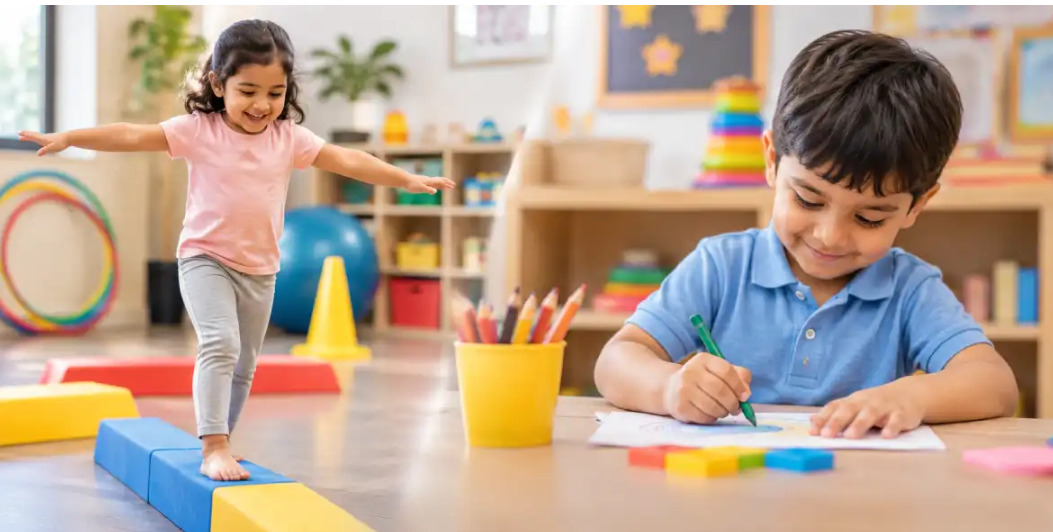
Two important areas of physical development play a major role in this process: gross motor skills and fine motor skills.
While gross motor skills involve larger body movements, fine motor skills focus on smaller, more controlled movements of the hands and fingers. Both work together to create a strong foundation for handwriting and other classroom activities.
In this blog, we will explore why these skills matter before children enter primary school, how they support writing readiness, and which simple activities parents can introduce at home to encourage their development.
Writing readiness refers to the physical, cognitive, and developmental abilities that help children begin exploring writing comfortably and confidently.
Before children start forming recognisable letters, they gradually learn to control their bodies, coordinate their hand movements, recognise shapes, and understand how writing tools work.
Some important foundations of writing readiness include:
These abilities develop gradually through everyday play, exploration, and meaningful learning experiences. Children do not need to master formal handwriting before entering primary school. Instead, they benefit from opportunities to develop the foundational skills that make writing easier over time.
Gross motor skills involve the use of large muscle groups in the arms, legs, back, shoulders, and core. These muscles help children perform activities such as walking, running, jumping, climbing, balancing, and throwing.
Parents may wonder how activities like jumping or playing with a ball can help a child learn to write. The connection lies in the physical foundation these movements help develop.
When children have opportunities to strengthen their core, shoulders, and arms, they gradually develop better body stability and control. These abilities support the posture and upper-body movements needed for seated activities such as drawing, colouring, and writing.
1. Develops Core Strength and Posture
Children need adequate core strength to maintain a comfortable sitting position while participating in classroom activities.
Activities that involve crawling, climbing, balancing, and moving help strengthen the muscles that support posture.
2. Strengthens Shoulder and Arm Muscles
Before children develop precise finger movements, they need opportunities to use their larger arm muscles.
Reaching, throwing, pushing, and pulling help develop the strength and control needed for activities such as drawing on a large surface.
3. Improves Balance and Body Coordination
Good body coordination helps children manage their movements while sitting, standing, and participating in classroom activities.
Balance-based games encourage children to understand how their bodies move and maintain control during different activities.
4. Supports Hand-Eye Coordination
Activities involving throwing, catching, and aiming help children coordinate what they see with how they move their hands and arms.
This ability is also important when children begin tracing lines, colouring pictures, and copying simple shapes.
A preschool environment plays an important role in preparing children for the transition to primary school.
Learning to write should not be limited to practising alphabets or completing worksheets. Children benefit from a balanced learning experience that combines physical activities, creative exploration, sensory play, and early literacy experiences.
Preschools can encourage writing readiness through:
A combination of these experiences helps children develop confidence, coordination, and the physical abilities that support their transition into primary school.
Writing readiness begins long before a child writes their first alphabet. It develops through everyday experiences that strengthen the body, improve coordination, and encourage controlled movements.
Parents can support this journey through simple activities such as outdoor games, playdough, drawing, puzzles, and creative play. Puzzles, in particular, offer children opportunities to develop problem-solving abilities, hand-eye coordination, and concentration. Read more about How Puzzles Help Young Children Develop Thinking Skills to discover how playful learning supports early childhood development.
At Elzee Preschool, we believe that every child’s learning journey begins with opportunities to explore, move, create, and develop essential life skills. Through meaningful early learning experiences and age-appropriate activities, children can gradually build the confidence and abilities they need for a smooth transition into primary school.