wisemonkeys logo
FeedNotificationProfileManage Forms
FeedNotificationSearchSign in
wisemonkeys logo

Blogs

DISK SCHEDULING

profile
vivek pandey
Sep 09, 2024
0 Likes
0 Discussions
38 Reads

DISK SCHEDULING

  • Disk scheduling is a technique operating systems use to manage the order in which disk I/O (input/output) requests are processed. Disk scheduling is also known as I/O Scheduling. The main goals of disk scheduling are to optimize the performance of disk operations, reduce the time it takes to access data and improve overall system efficiency.
  • In this article, we will explore the different types of disk scheduling algorithms and their functions. By understanding and implementing these algorithms, we can optimize system performance and ensure faster data retrieval.

Importance of Disk Scheduling in Operating System:

  • Multiple I/O requests may arrive by different processes and only one I/O request can be served at a time by the disk controller. Thus other I/O requests need to wait in the waiting queue and need to be scheduled.
  • Two or more requests may be far from each other so this can result in greater disk arm movement.
  • Hard drives are one of the slowest parts of the computer system and thus need to be accessed in an efficient manner.

Key Terms Associated with Disk Scheduling

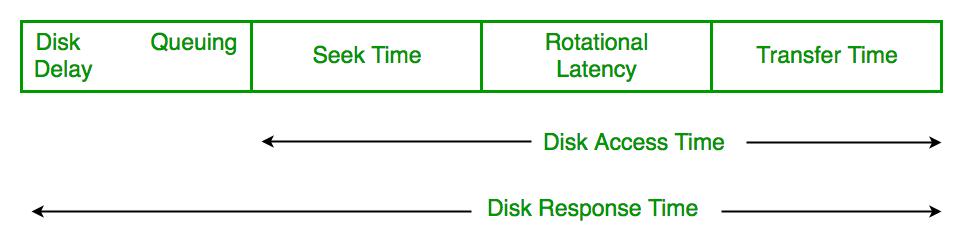
  • Seek Time: Seek time is the time taken to locate the disk arm to a specified track where the data is to be read or written. So the disk scheduling algorithm that gives a minimum average seek time is better.
  • Rotational Latency: Rotational Latency is the time taken by the desired sector of the disk to rotate into a position so that it can access the read/write heads. So the disk scheduling algorithm that gives minimum rotational latency is better.
  • Transfer Time: Transfer time is the time to transfer the data. It depends on the rotating speed of the disk and the number of bytes to be transferred.

  • Disk Access Time:


Comments ()


Sign in

Read Next

Title: Network Sniffing Techniques: Uncovering the Secrets of Data Transfer

Blog banner

Android Application Components and Activity Lifecycle

Blog banner

Importance of Network Security Risk

Blog banner

Microsoft Word

Blog banner

Ola

Blog banner

Wiretapping

Blog banner

The Rise of Evil Twin Attacks: A New Kind Of Spoofing Cyberattack

Blog banner

OS ASSIGNMENT

Blog banner

Expressing and Measuring Risk (Risk Management)

Blog banner

Semaphores

Blog banner

Student Grade Calculator in LISP

Blog banner

Deadlock

Blog banner

Severe landslides continue to cause concern in Joshimath, Uttarakhand

Blog banner

Unlocking Success: Mastering Google Ads Strategies

Blog banner

MEMORY FORENSIC ACQUISITION AND ANALYSISOF MEMORY AND ITS TOOLS COMPARISON

Blog banner

Impacts of Data Breach On Companies Challenges and Prevention

Blog banner

SPAM

Blog banner

Kernel Memory Allocation In Linux.

Blog banner

File system

Blog banner

Mobile Survey

Blog banner

Memory Management

Blog banner

Study of Backdoor and Trojan tools

Blog banner

Dal Bafla Recipe

Blog banner

PODIO

Blog banner

KASHMIR TRIPS

Blog banner

Monday. com App

Blog banner

A-B-C of Networking: Part-1 (Basics)

Blog banner

"Mahakali cave"

Blog banner

Dental Problems That Start Small But Should Never Be Ignored

Blog banner

Linux 94

Blog banner

Virtual memory

Blog banner

"Audit" In Data Science

Blog banner

Memory input output management

Blog banner

Evolution of Operating system

Blog banner

The Art Of Getting What You Want In Life....

Blog banner

Best password managers: Reviews of the top products

Blog banner

Raid

Blog banner

Electronic data interchange

Blog banner

SmartData Collective: Data Science aur Analytics ki Duniya

Blog banner

Types of Viruses

Blog banner

Uniprocessor Scheduling

Blog banner

Proof-of-Stake (PoS)

Blog banner